Improving Seafood Plant Trials Without Disrupting Production
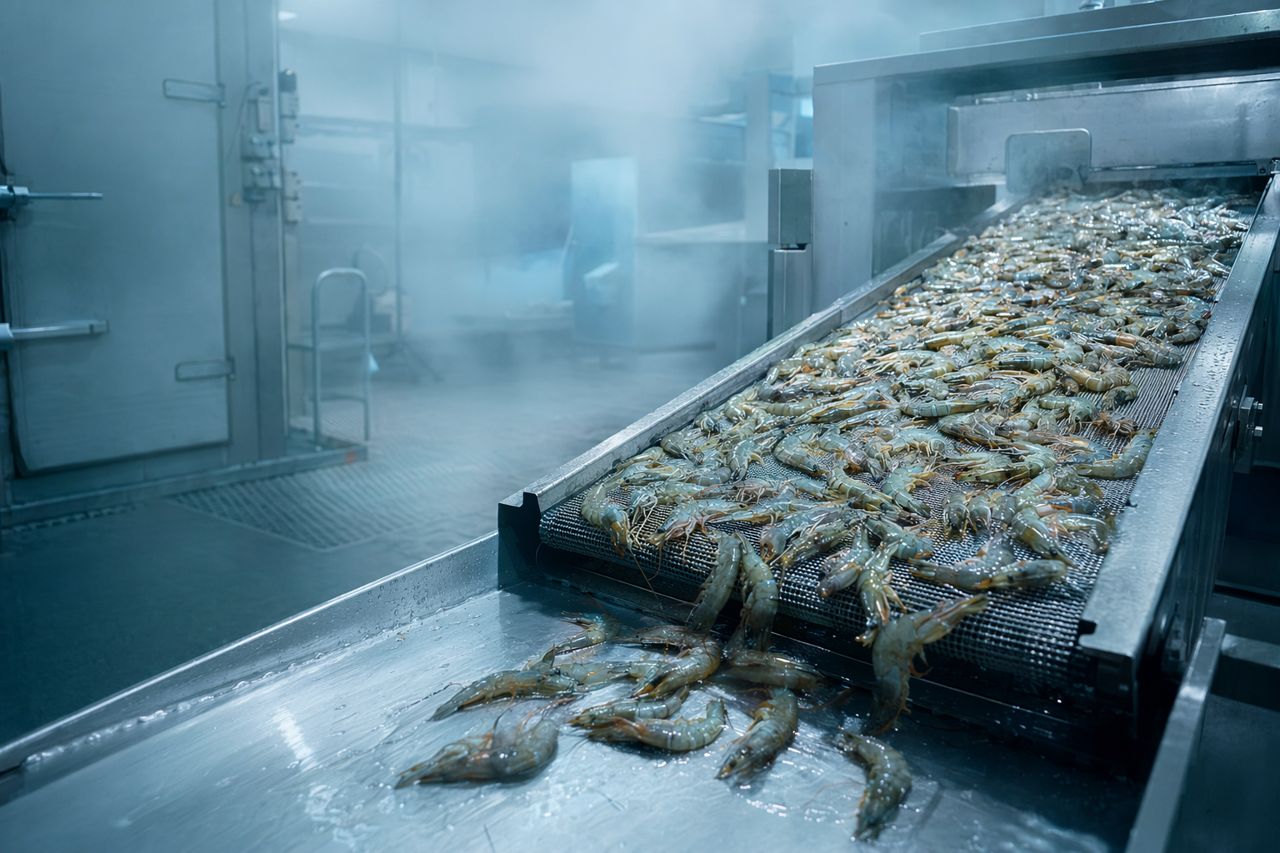
Cold-chain seafood plants do not get quiet weeks for experimentation. Shrimp keeps moving, export windows stay fixed, QA documentation cannot drift, and a small line disruption can turn into a missed shipment.
That is why enzyme-assisted shrimp peeling trials need to be built like plant operations, not lab demonstrations. Enzymechain supports processors as an enzyme supplier for shrimp peeling and seafood processing with trial planning focused on throughput, peel quality, temperature discipline, labor impact, and repeatable yield.
The goal is not to “test an enzyme.” The goal is to protect production while measuring value.
A useful plant trial answers operational questions:
- Does shell release improve without raising mechanical damage?
- Can operators reduce rework and hand-finishing pressure?
- Does the line hold its normal rhythm through brine, peeling, inspection, and packing?
- Are QA records clean enough to support a production decision?
- Does saleable yield improve consistently across real incoming material?
If the trial interrupts normal production flow, the data becomes difficult to trust. A controlled test should run inside the plant’s existing discipline: cold-room control, batch identity, sanitation windows, QA checks, and shipment commitments.
Start with the decision the plant needs to make
Before product is pulled, define the decision standard. A seafood processor should know what outcome would justify moving from trial to routine use.
Practical decision criteria
Use metrics your plant already understands:
- Peel completeness after normal processing
- Reduced torn meat, broken pieces, and surface abrasion
- Saleable yield by lot or production window
- Labor required for trimming, inspection, and rework
- Line stoppages, slowdowns, or operator interventions
- Texture, odor, appearance, and cold-chain compliance
- Compatibility with downstream washing, grading, freezing, or packing
Avoid designing a trial around isolated chemistry. The plant buys performance at the line, not a certificate in a folder.
Keep the trial narrow enough to control
The fastest way to lose confidence is to change too many variables at once. Incoming shrimp condition, size distribution, molt stage, soak time, brine handling, operator technique, and peeling equipment settings can all influence results.
A strong trial keeps the operating window tight.
Recommended structure
-
Select one product family first
Start with a shrimp format where the current peeling challenge is visible and commercially important. -
Choose a defined production window
Trial during a normal operating period, not a distressed recovery shift. -
Maintain a clear comparison
Compare enzyme-assisted handling against the plant’s current process using comparable raw material and operator conditions. -
Limit process changes
Do not adjust brine, equipment pressure, dwell sequence, inspection rules, and staffing all at once. Change only what the trial is meant to test. -
Document exceptions immediately
If raw material temperature, line speed, equipment condition, or hold time changes, note it while the shift is still running.
Protect shipment schedules first
A trial should never depend on heroic recovery work after the test. Build it around production protection.
Production safeguards that matter
- Pre-approve the trial window with production, QA, maintenance, sanitation, and logistics.
- Keep the trial volume sized so the plant can redirect, rework, or hold product if required.
- Use normal lot identification and batch traceability.
- Keep cold-room handling procedures unchanged unless the trial design specifically calls for a controlled adjustment.
- Confirm who can pause the trial and what condition triggers that decision.
- Schedule the review while observations are fresh, not days later.
The best trial is boring to the plant floor: product moves, records are complete, and the team can see the difference without chaos.
Temperature control is a trial variable, not background noise
In cold-chain seafood processing, temperature control is part of the result. Enzyme-assisted peeling must be evaluated inside realistic chilled handling, not outside it.
For shrimp processors, the trial plan should specify:
- Incoming product condition at release to production
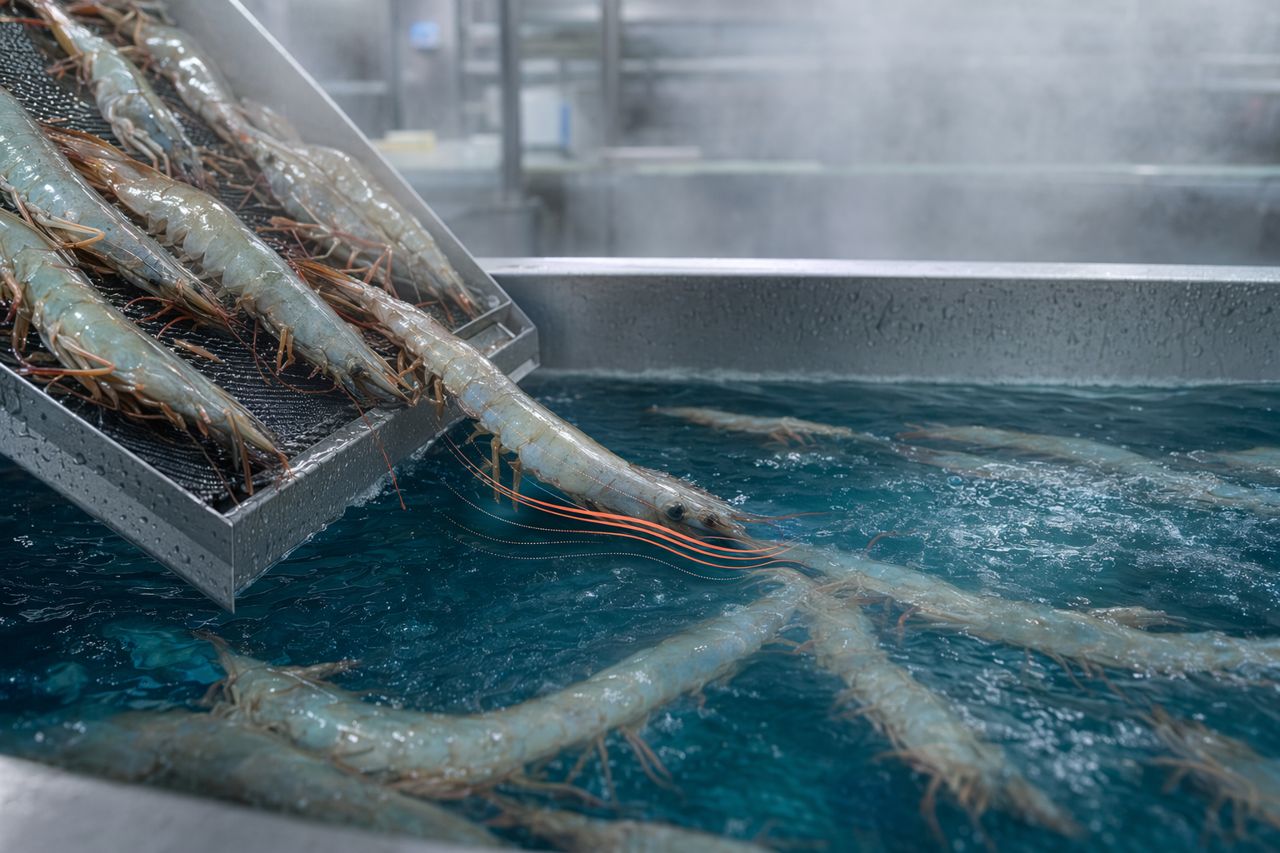
- Brine handling discipline
- Time between treatment, peeling, and inspection
- Product exposure during transfers
- Any hold or staging points before freezing or packing
When temperature discipline is clean, peel quality data becomes easier to interpret. When temperature discipline is loose, every conclusion becomes debatable.
Train operators on what to observe
Operators see details that spreadsheets miss. Before the trial starts, align the floor team on what to watch.
Useful plant-floor observations
- Shell separation at normal mechanical settings
- Meat surface condition after peel
- Amount of hand correction needed
- Build-up on equipment or conveyors
- Changes in product feel during handling
- Inspection table burden
- Downstream flow into grading, freezing, or packing
Keep the observation sheet short. If operators need to stop working to complete paperwork, the trial design is too heavy.
QA records should make the result defensible
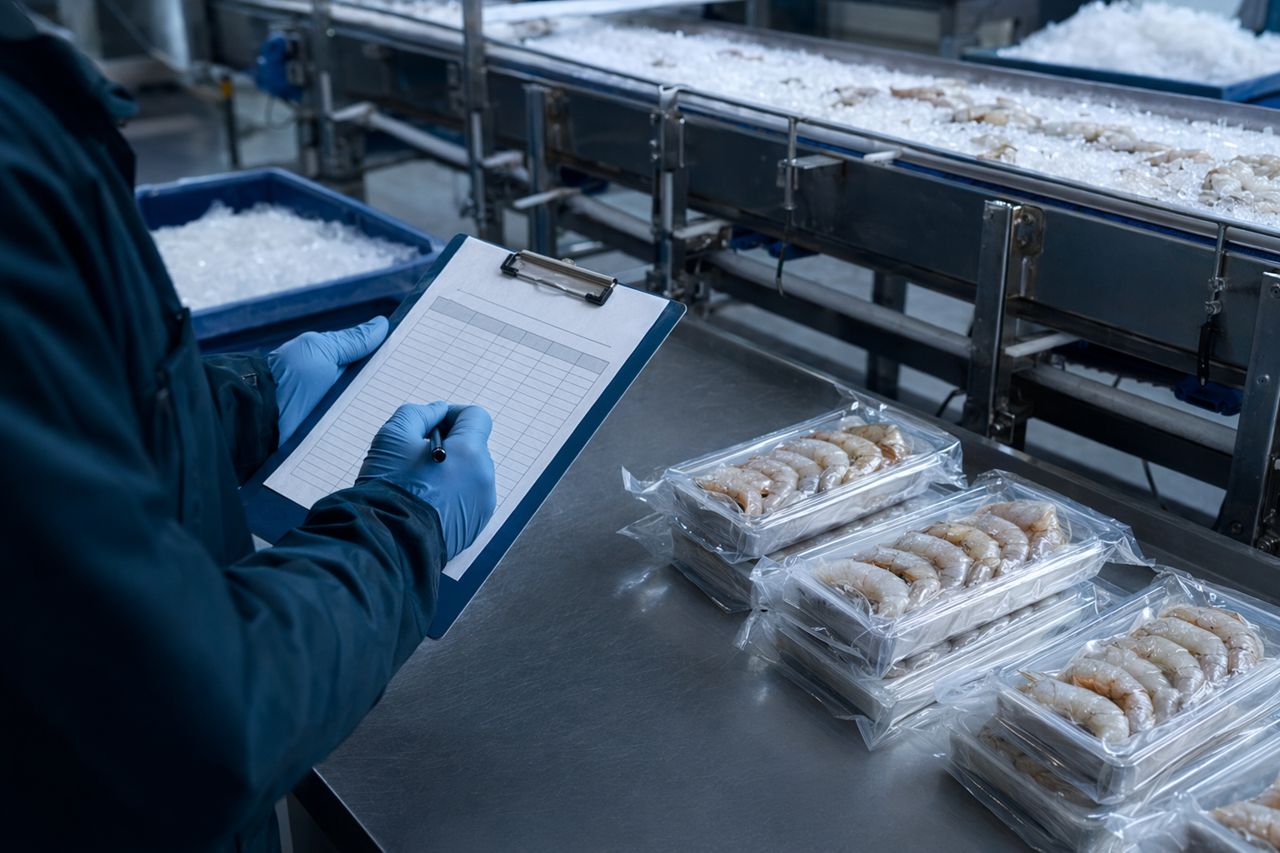
A seafood enzyme trial should leave a clean record trail. That does not mean excessive documentation. It means the right documentation.
Capture the essentials
- Lot identity and raw material notes
- Trial window and comparison window
- Process conditions that were intentionally held steady
- Deviations and corrective actions
- Peel quality observations
- Yield and downgrade notes
- Labor and rework impact
- Final product appearance and acceptance
When the commercial team asks whether the result can be repeated, QA should be able to answer without reconstructing the day from memory.
Measure labor impact without disrupting labor
Labor reduction is often one of the biggest drivers for enzyme-assisted shrimp peeling. But labor impact should be measured carefully.
Do not judge labor only by headcount. Look at where the work moves:
- Less manual finishing at inspection tables
- Fewer pieces requiring rework
- Smoother operator pacing
- Reduced pressure during peak throughput periods
- Better consistency across shifts
A trial that reduces rework but creates a new bottleneck somewhere else is not a win. Follow the product all the way through the downstream seafood processing flow.
Avoid the common trial mistakes
Mistake 1: Running the test on unusual raw material
If the lot is not representative, the conclusion will not be representative. Use material that reflects normal commercial pressure.
Mistake 2: Over-adjusting the process during the trial
When the team keeps tuning equipment, brine handling, and timing at the same time, the result becomes difficult to assign.
Mistake 3: Measuring only peel release
Peel release matters, but seafood plants sell finished product. Track yield, texture, damage, labor, and downstream flow.
Mistake 4: Leaving QA out until the end
QA should help design the record before production starts. That protects the trial and the plant.
Mistake 5: Treating one good run as full validation
A strong first result is a signal. Repetition across realistic raw material variation is what supports a purchasing decision.
What Enzymechain needs to scope a controlled quote
For a practical recommendation, send the plant details that affect performance and implementation.
Helpful information includes:
- Shrimp species and product format
- Current peeling method and main pain points
- Typical raw material condition at processing
- Where peel loss, meat damage, or rework is occurring
- Desired trial window and production constraints
- Downstream steps after peeling
- QA or customer requirements that must be protected
With that context, Enzymechain can help outline an enzyme trial that respects production reality.
Run the test without turning the plant into a test site
The right seafood plant trial should make the operation more certain, not less. Keep the scope tight, protect cold-chain discipline, hold comparison conditions steady, and measure what the plant actually buys: consistent peel quality, less damage, reduced labor pressure, stable throughput, and saleable yield.
Ready to plan a controlled production trial? Request a quote through the on-site form and include your shrimp format, current peeling challenge, and preferred trial window.