Bulk Seafood Processing Enzyme for Yield Improvement
Cold-chain seafood processing plants do not need another variable on the floor. They need controlled levers that improve throughput without compromising temperature discipline, product appearance, or downstream line balance.
Enzymechain supplies enzyme-assisted processing solutions for shrimp peeling and seafood processing operations where yield, peel quality, and repeatability matter. Our approach fits into the same operating logic plant teams already manage every shift: brine strength, temperature, dwell time, agitation, mechanical handling, sanitation, and labor allocation.
As an enzyme supplier for shrimp peeling and seafood processing, Enzymechain focuses on practical plant outcomes: cleaner shell release, reduced mechanical damage, more consistent finished product, and less dependency on aggressive peeling pressure. Supply is wholesale and quoted per order, for processing plants and for the distributors who stock process aids for them.
Wholesale and bulk enzyme supply, quoted per order. For seafood processors, co-packers and the ingredient distributors who supply them. To get a quote, send the application (for example shrimp peeling, squid tenderising or by-product hydrolysis), the approximate quantity per month, your preferred pack size and the delivery country through the inquiry form.
Enzyme-Assisted Processing as a Controlled Yield Lever
Shrimp peeling efficiency is rarely driven by one factor. Temperature drift, raw material variation, soak timing, shell condition, and equipment pressure all influence what the line delivers.
Enzymechain enzymes are positioned as part of a controlled processing window, not as a standalone shortcut. When properly integrated, enzyme-assisted treatment can help the plant loosen shell attachment before mechanical peeling, allowing the line to run with better product protection and more predictable recovery.
Plant-Floor Objectives
- Improve peel release before mechanical stress is applied
- Reduce broken pieces, gouging, and surface damage
- Support consistent yield across variable incoming lots
- Help stabilize labor demand during high-volume runs
- Reduce rework caused by uneven peel performance
- Improve flow into grading, inspection, freezing, and packing
Built for Cold-Chain Seafood Conditions
Seafood plants operate under tight temperature expectations. Enzyme performance has to be compatible with chilled brines, controlled dwell windows, and continuous production movement.
Enzymechain works with processors to match enzyme use to the realities of the line:
- Raw shrimp condition and shell adhesion
- Chilled brine handling and mixing sequence
- Dwell time targets without slowing production
- Conveyor, tumbler, flume, or batch soak layout
- Rinse and downstream inspection requirements
- Existing peelers, sorters, and freezing schedules
The goal is not to disrupt the plant. The goal is to make shell release more predictable before the product reaches the most damaging step.
Where It Fits in the Process
1. Receiving and Lot Assessment
Incoming shrimp can vary by size, harvest condition, shell hardness, and hold history. Enzymechain supports processors in defining practical use ranges by lot type so operators can make consistent decisions before the line is loaded.
2. Controlled Brine or Soak Stage
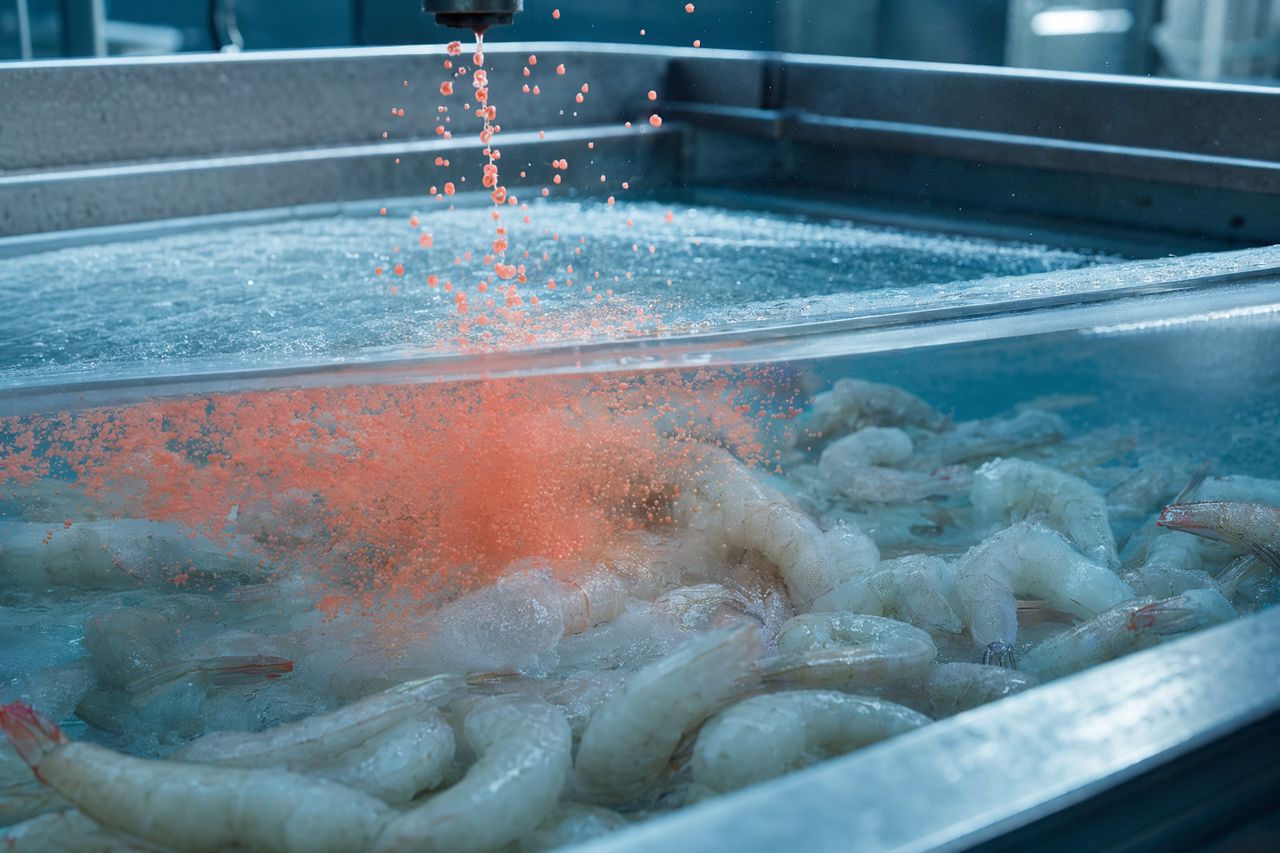
The enzyme is introduced into a defined chilled treatment stage. Mixing, temperature control, and contact time are managed like any other critical process variable.
3. Mechanical Peeling with Lower Product Stress
Improved shell release can allow the peeling stage to perform with less aggressive force, helping protect finished shrimp shape, surface integrity, and appearance.
4. Rinse, Inspection, and Downstream Flow
A cleaner peel helps reduce inspection burden and supports smoother movement into grading, freezing, packing, or additional seafood processing steps.
Why Plant Managers Evaluate Enzyme-Assisted Peeling
Throughput Without Excessive Damage
Pushing mechanical equipment harder can increase output, but it often creates breakage, uneven peel, and quality deductions. Enzyme-assisted shell release gives the plant another way to improve flow without relying only on pressure and speed.
More Consistent Yield Across Shifts
Yield loss is expensive when it changes shift to shift. A defined enzyme process can help reduce variation tied to operator technique, raw material inconsistency, and mechanical adjustment drift.
Labor Efficiency at Inspection and Rework
Uneven peel quality adds labor downstream. Cleaner release can reduce the amount of hand correction, rework, and sorting intervention needed to keep finished product within specification.
Better Product Appearance
The market sees the finished shrimp, not the process. Reduced tearing, scarring, and broken pieces help protect the value of the pack.
Supply Support for Industrial Seafood Plants
Enzymechain supports B2B processors with bulk supply planning, lot-to-lot documentation, technical onboarding, and process-fit discussions. We work with production, quality, procurement, and operations teams to define a practical adoption path before scale-up.
What We Help Clarify
- Which shrimp formats and sizes are best suited for enzyme-assisted peeling
- How the enzyme should be introduced into the existing cold-chain process
- Where operators should monitor timing, temperature, and brine consistency
- How to compare treated and untreated production runs
- How to align procurement volume with seasonal processing demand
Use Cases
Shrimp Peeling Lines
For processors looking to improve shell release, reduce broken pieces, and protect finished yield during high-volume peeling.
Mixed Seafood Processing Facilities
For plants that handle shrimp alongside other chilled seafood workflows and need supplier support that understands throughput, sanitation windows, and cold-room constraints.
Seasonal Production Peaks
For operations that need more consistent peel performance when raw material volume increases and labor availability tightens.
Evaluation Criteria for Procurement and Operations
When comparing seafood processing enzyme suppliers, plant teams should look beyond the product name. The right supplier should help the facility evaluate operational fit.
Key questions include:
- Can the enzyme be integrated without slowing the line?
- Does it support the plant’s cold-chain handling strategy?
- Can the supplier support bulk planning and production scheduling?
- Are operators able to manage the process with clear parameters?
- Does the supplier understand yield, peel quality, downtime, and inspection labor?
Enzymechain is built for these conversations.
Faceless Explainer Video
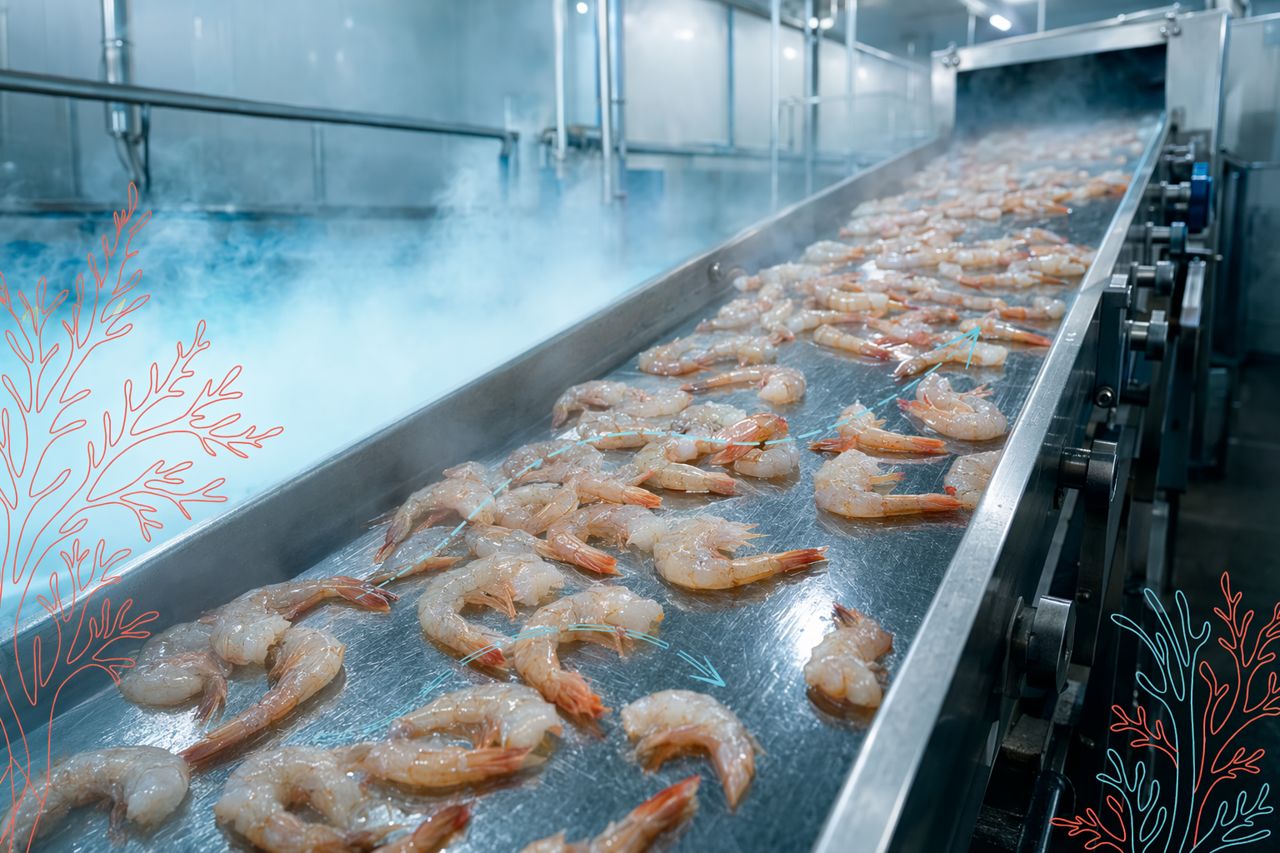
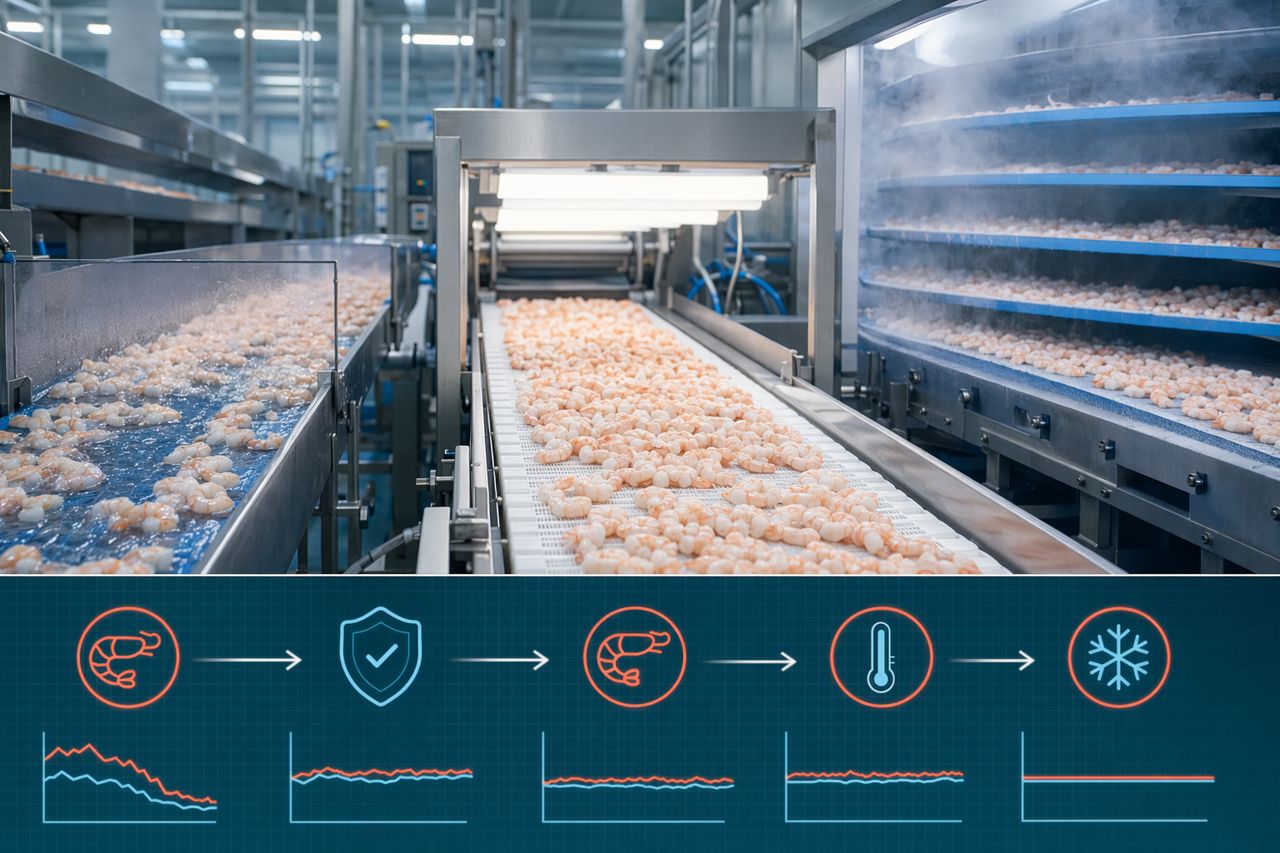
A one-minute faceless explainer video is embedded on this page for production and procurement teams. It shows chilled shrimp moving through stainless conveyors and brine contact points, with visual overlays explaining shell-release control, yield protection, reduced mechanical damage, and downstream seafood processing flow.
Request a Quote
If you are evaluating enzyme-assisted shrimp peeling or bulk seafood processing enzyme supply, send your plant requirements through the on-site form. Include shrimp format, processing layout, target application point, approximate quantity per month, preferred pack size and delivery country.