IQF Shrimp Plants: Texture Defects That Start in Wet Processing
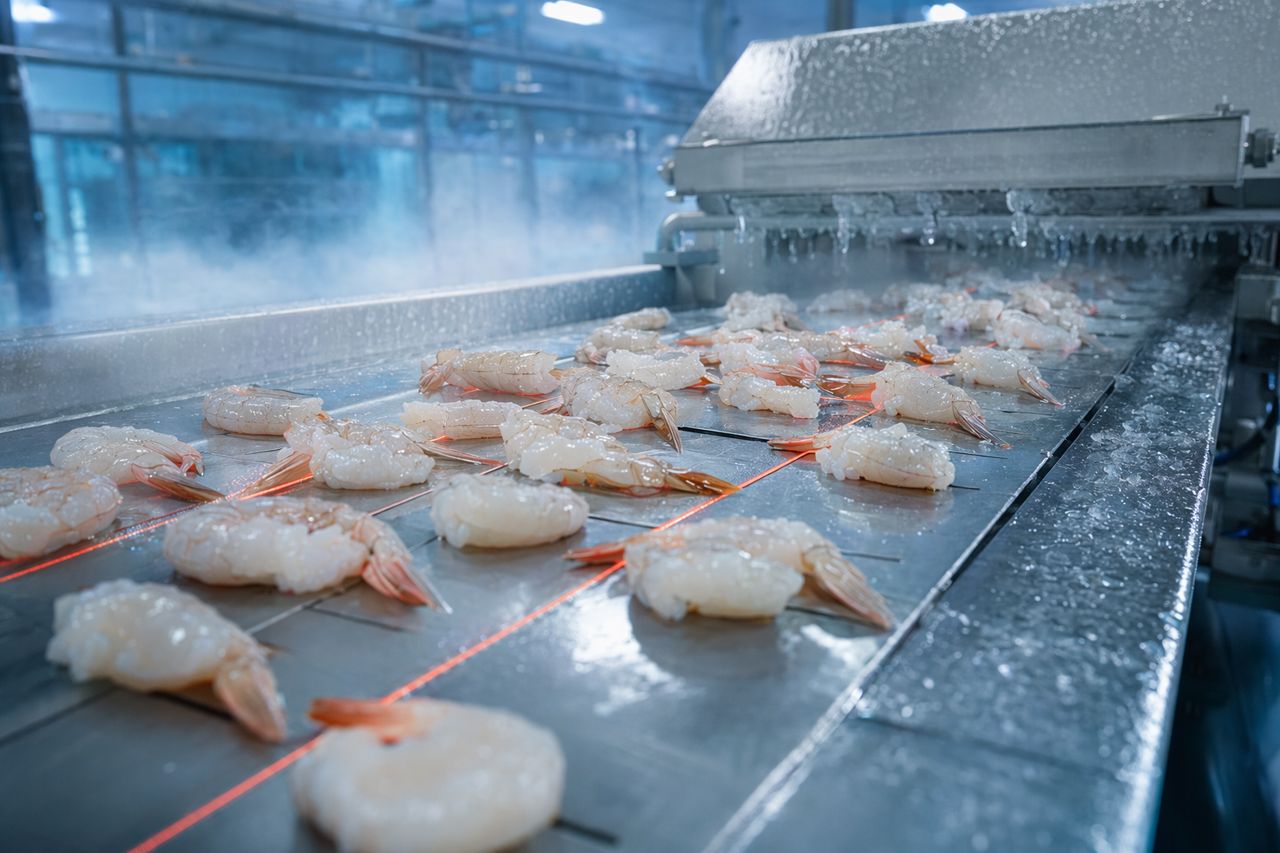
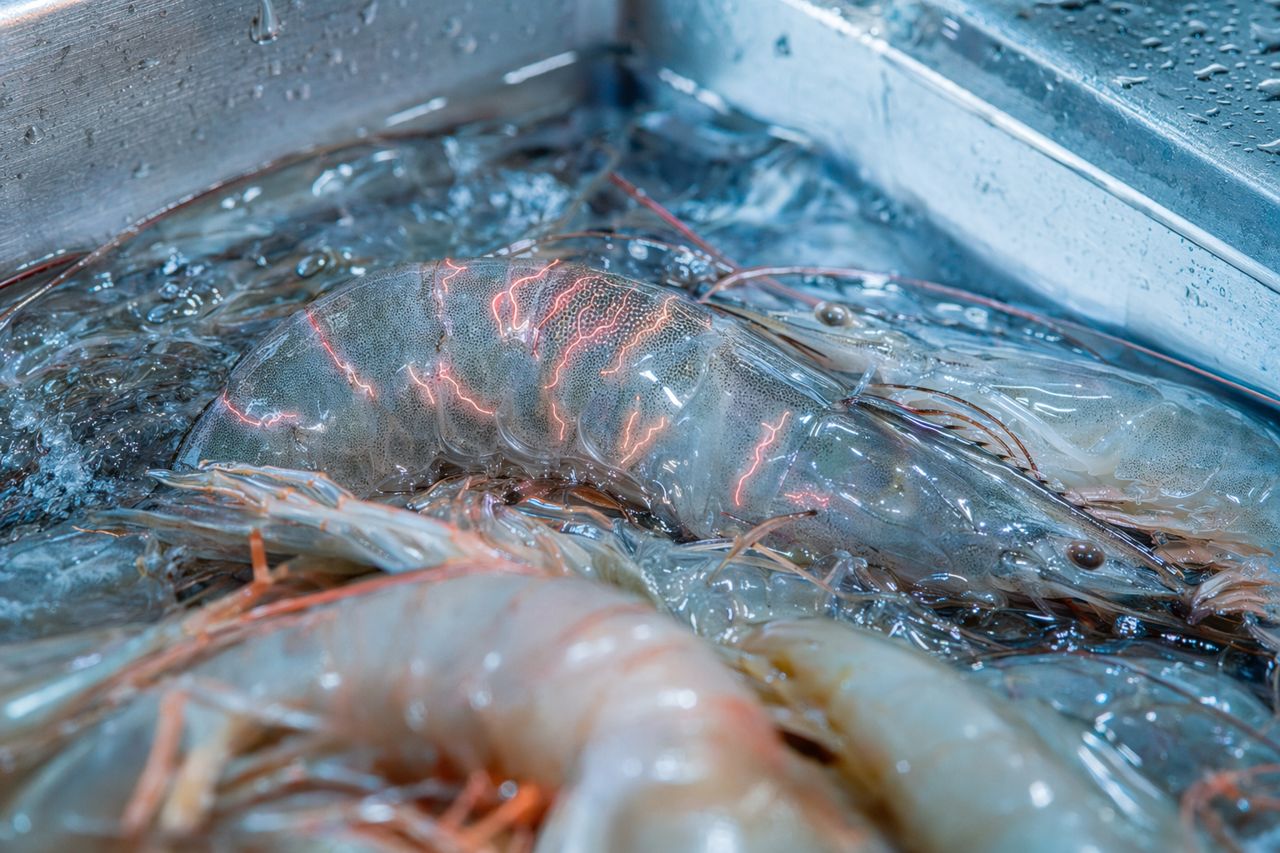
Customer texture complaints rarely begin at the freezer discharge. They usually begin earlier, while shrimp are still moving through receiving, thawing, washing, brining, peeling, rinsing, dewatering, and belt loading.
For an IQF shrimp plant, the frozen pack is the final evidence of every wet-line decision: temperature drift, dwell-time creep, shell damage, overhandling, poor drainage, uneven brine contact, or peel conditions that force operators to compensate with more mechanical action.
Enzymechain works with processors that need an enzyme supplier for shrimp peeling and seafood processing focused on plant outcomes: cleaner peel, lower mechanical damage, tighter process windows, and more consistent finished-product texture.
This article is written for plant managers, QA leads and the buyers who source process aids for IQF lines. It connects common frozen texture defects back to the wet processing line, where they can be controlled before they become customer claims.
Wholesale and bulk enzyme supply, quoted per order. For seafood processors, co-packers and the ingredient distributors who supply them. To get a quote, send the application (for example shrimp peeling, squid tenderising or by-product hydrolysis), the approximate quantity per month, your preferred pack size and the delivery country through the inquiry form.
Why texture defects show up after IQF
IQF freezing can preserve quality, but it does not repair texture. Once shrimp enter the freezer with surface damage, uneven hydration, torn muscle structure, residual process heat, or excessive free moisture, the defect becomes locked into the finished product.
Typical customer language includes:
- “Soft bite” or mushy texture after thawing
- Dry or fibrous bite
- Broken tails or split segments
- Excessive drip loss in the bag or after thaw
- Uneven curl, inconsistent appearance, or ragged peel
- Surface dehydration, frost, or glaze inconsistency
- High rejection during reinspection or packing
When these issues appear, the freezer often gets blamed first. In many cases, the more useful investigation starts upstream.
Wet-line root causes that become frozen texture complaints
1. Temperature drift before peeling
Cold-chain shrimp processing depends on tight temperature control before and during wet handling. When raw material warms during staging, thawing, waiting, or rework loops, texture becomes more vulnerable to mechanical stress.
Temperature drift can lead to:
- Softer muscle during peeling
- More shell adhesion variation across lots
- Higher breakage under the same machine settings
- Increased drip after freezing and thawing
- Less predictable brine and rinse performance
Plant-floor signal: operators keep adjusting peelers, brush pressure, belt speed, or water flow to chase the same specification across the shift.
2. Excessive dwell time in wet steps
Wet processing is not just a sequence of tanks and conveyors. It is a time-and-temperature system. Long dwell in thaw tanks, brine, rinse flumes, surge bins, or rework tubs can change surface condition before the shrimp ever reach the IQF belt.
Long dwell often shows up as:
- Uneven bite between early and late production
- Batch-to-batch texture variation
- More broken pieces after peeling
- Increased moisture carryover into freezing
- Greater dependency on operator judgment
Plant-floor signal: the first pallets of a lot pass inspection, while later pallets from the same raw material create complaints.
3. Aggressive mechanical peeling compensation
When shell release is inconsistent, plants often compensate mechanically: more pressure, more passes, longer contact, higher agitation, or more rework. This may improve peel completion, but it can also increase muscle damage.
Mechanical overcompensation can cause:
- Split segments
- Tail damage
- Torn surface fibers
- Reduced premium appearance
- Higher grading loss
- Greater fines or broken-count shrink
Enzyme-assisted peeling programs are used to support shell-release consistency, allowing processors to reduce harsh mechanical settings where the process allows. The target is not only peel completion. The target is sellable yield with clean appearance and controlled texture.
4. Uneven brine or process-aid contact
In wet processing, uniform contact matters. Dead zones, poor mixing, clumped product, overloaded baskets, and inconsistent residence time create uneven treatment. One part of the lot may peel cleanly while another requires extra mechanical correction.
Watch for:
- Inconsistent shell release across the same batch
- Localized soft texture or surface weakening
- Operators separating “easy peel” and “hard peel” portions manually
- More rework at high throughput
- Inconsistent finished counts or appearance
A good wet-line program must fit the plant’s equipment, not just the formulation. Conveyor loading, agitation, tank geometry, brine turnover, temperature, and discharge timing all influence repeatability.
5. Poor drainage before freezing
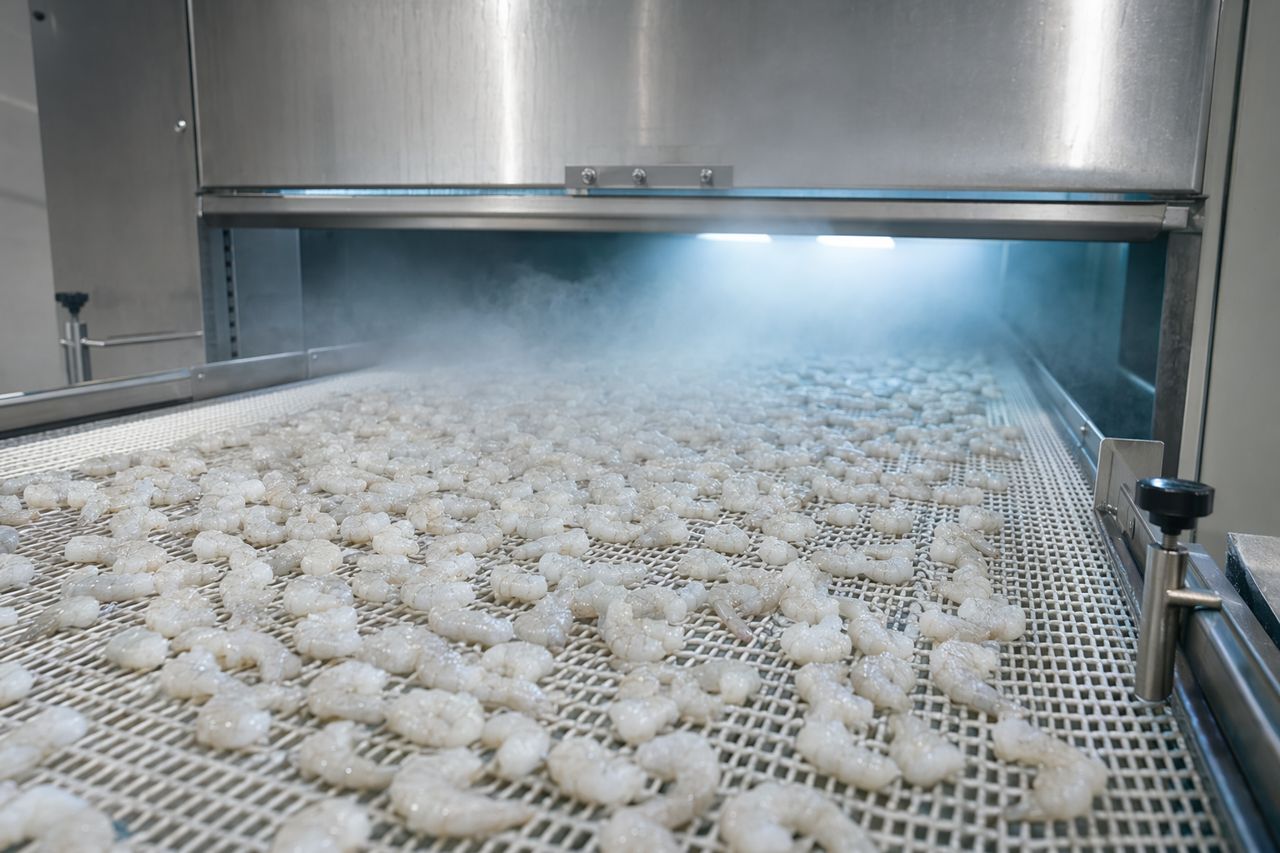
Excess surface water entering the IQF freezer affects freezing performance and finished-pack perception. It can contribute to clumping, frost, glaze variability, and uneven surface appearance.
Drainage problems may originate from:
- Overloaded dewatering belts
- Inadequate incline time
- Excessive rinse flow near discharge
- Product pooling in transfer points
- Poor belt loading into the freezer
Plant-floor signal: freezer operators see more clumps or frost variation after certain wet-line changeovers, even when freezer settings are unchanged.
Texture control is a throughput issue, not only a QA issue
Texture defects reduce value in several ways at once. They create claims, but they also slow the plant.
When wet processing is unstable, managers see:
- More line checks and hold decisions
- More rework loops
- More operator intervention at peelers
- Lower effective throughput
- More giveaway from grading, trimming, or downgrade
- More time spent explaining variation to buyers
A stable wet-line program protects the commercial claim on the box: count, appearance, bite, yield, and pack consistency.
Where enzyme-supported peeling fits
For shrimp processors, the role of an enzyme program is practical: support more predictable shell release under controlled cold-chain conditions.
A plant-focused enzyme supplier should help you evaluate:
- Raw material variability by species, size, season, and shell condition
- Current peel completion versus breakage and appearance loss
- Wet-line temperature windows
- Contact time and flow pattern in existing equipment
- Mechanical settings before and after process adjustment
- Rinse, drainage, and freezer loading conditions
- Finished product texture after freeze and thaw evaluation
The best programs are built around the process window your plant can actually hold. That means clear operating targets, realistic changeover procedures, and a verification plan tied to yield, peel quality, labor reduction, and complaint reduction.
Practical audit points for plant managers
Use this checklist when texture issues appear in IQF shrimp production.
Receiving and thawing
- Are lots staged cold and processed in a predictable order?
- Are thaw endpoints consistent by size and block condition?
- Is product sitting warm during line delays?
- Are partial lots creating mixed texture outcomes?
Brining and peeling
- Is contact time consistent across the full belt width or tank load?
- Are operators increasing mechanical force to maintain peel completion?
- Are shell fragments and damaged pieces rising during high-speed production?
- Are hard-to-peel lots identified early enough to adjust the process?
Rinsing and dewatering
- Is rinse flow removing loose shell without adding unnecessary residence time?
- Is product entering the freezer with controlled surface moisture?
- Are transfer points causing impact damage or pooling?
- Does drainage performance change during peak throughput?
IQF loading and frozen inspection
- Is belt loading even, or are piles forming at the infeed?
- Are clumps linked to wet-line surges?
- Does texture after thaw match texture before freeze?
- Are complaints isolated by lot, shift, operator setting, or raw material source?
The key connection: peel quality and texture quality must be managed together
A clean peel that damages the shrimp is not a high-yield process. A gentle process that leaves shell attached is not commercially acceptable either.
The plant target is the balance:
- Shell release without excessive mechanical force
- Consistent peel appearance without slowing the line
- Cold handling without avoidable dwell time
- Controlled moisture before freezing
- Frozen texture that matches buyer expectations after thaw
This is why wet-line optimization matters. IQF quality is built before the freezer.
Work with Enzymechain
Enzymechain supplies enzyme solutions and process support for shrimp peeling and cold-chain seafood processing. We work with plant teams to improve shell-release consistency, reduce harsh mechanical compensation, and protect yield through the wet line into IQF packing.
If your plant is seeing texture complaints, broken pieces, peel variation, or throughput loss, send us your process details and target product format.
Request a quote through the inquiry form and our technical team will review your wet-line conditions, application goals, and supply requirements. Supply is wholesale and quoted per order. To speed up the quote, include:
- Species, count size and product form (IQF peeled, PD, PUD, tail-on)
- The problem you want solved (peel variation, broken pieces, soft bite, drip)
- Approximate quantity per month and preferred pack size
- Delivery country