Packaging Decisions That Affect Frozen Shrimp Quality Claims
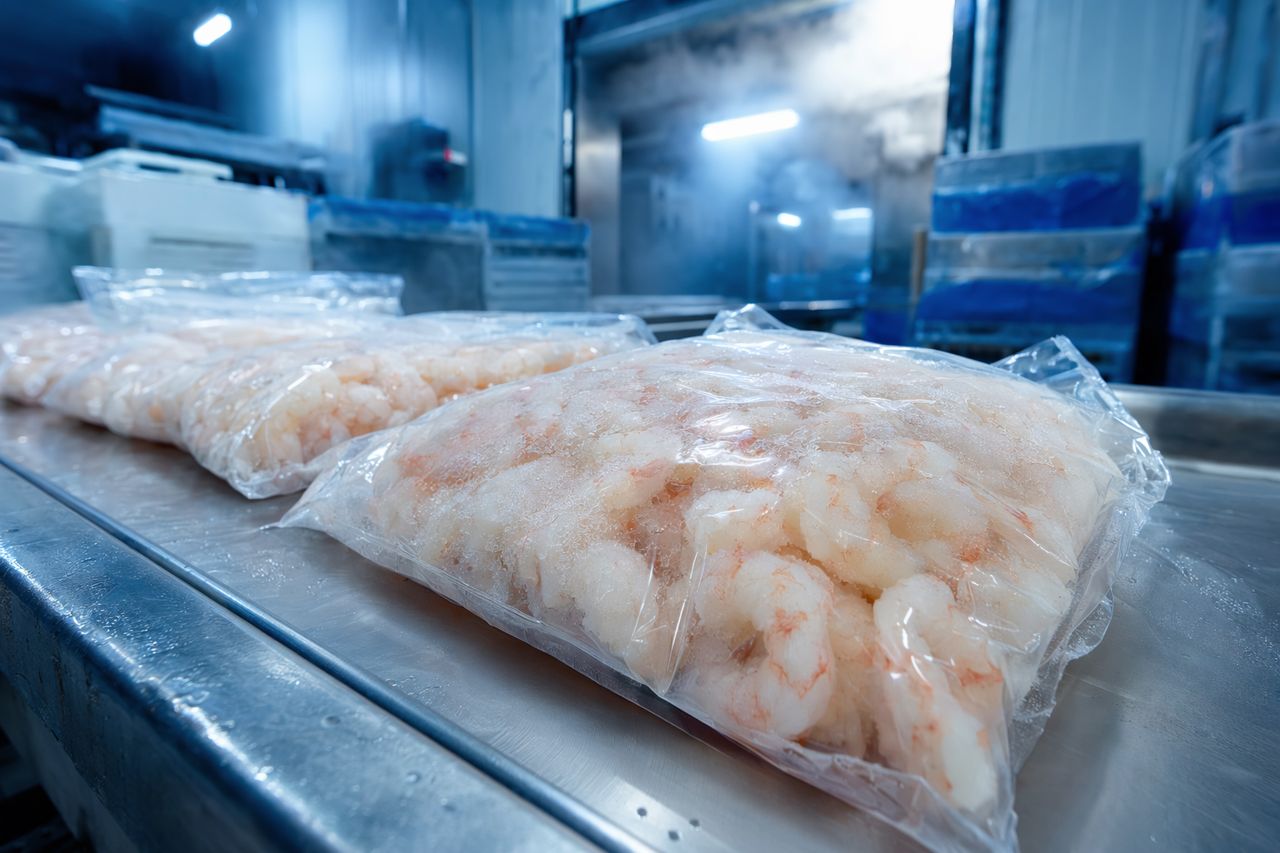
Frozen shrimp quality claims rarely start with one obvious failure. They usually build across the line: peel damage that exposes meat, uneven glaze pickup, bag abrasion in the master case, pallet warm-up during staging, or label language that promises more than the cold chain can protect.
For cold-chain seafood processors, packaging is not a final cosmetic step. It is a yield protection system. It has to defend texture, appearance, net weight compliance, and customer confidence from the freezer exit to the receiving dock.
Enzymechain works with seafood processors as an enzyme supplier for shrimp peeling and seafood processing, so we see packaging performance from the upstream side as well. Better shell release and lower mechanical stress during peeling can reduce broken pieces before the product ever reaches the bag. Packaging then has a cleaner job: preserve quality rather than hide process damage. This guide is for processors, packers and the procurement teams that buy their process aids.
Wholesale and bulk enzyme supply, quoted per order. For seafood processors, co-packers and the ingredient distributors who supply them. To get a quote, send the application (for example shrimp peeling, squid tenderising or by-product hydrolysis), the approximate quantity per month, your preferred pack size and the delivery country through the inquiry form.
Where frozen shrimp quality claims usually form
Most buyer complaints are reported at receiving, thawing, or repack inspection. But the cause may sit earlier in the process. A strong packaging decision has to account for these claim drivers:
- Dehydration and freezer burn from poor barrier performance, headspace, or loose sealing.
- Glaze inconsistency that creates visual variation, weight disputes, or thawing complaints.
- Broken shrimp and tail loss caused by overhandling, sharp bag folds, case compression, or upstream peel damage.
- Ice crystals and clumping linked to warm staging, slow freezing, or temperature cycling.
- Odor transfer when films, liners, or warehouse environments are not controlled.
- Label and specification conflicts between declared count, glaze language, net weight, and buyer inspection methods.
A packaging supplier, glaze-control vendor, or logistics partner can reduce claims when they understand the plant conditions that packaging must survive.
Film selection is a cold-chain decision, not just a cost decision
A frozen shrimp bag needs to resist puncture, abrasion, moisture loss, and seal failure at low temperature. Thin-gauge savings can disappear quickly when customers report frost, cracked seals, or excessive purge after thaw.
Evaluate film against the real line environment
Ask whether the film can handle:
- Frozen product edges and tail contact.
- High-speed filling and drop distances.
- Case packing pressure.
- Repeated handling during palletizing, export inspection, and distribution.
- Cold-room brittleness after storage.
For retail packs, appearance matters. For foodservice packs, durability and thaw performance often matter more. The best choice is not always the glossiest film; it is the material that holds seal integrity and moisture protection across the full route.
Seal quality is a throughput issue
Seal failures slow the line, create rework, and put product into ambiguous quality status. Operators then have to decide whether to repack, downgrade, or hold inventory.
Common seal-risk points include:
- Wet or frosted seal areas.
- Product trapped in the seal path.
- Overfilled bags that deform under case pressure.
- Inconsistent dwell time or temperature on high-speed equipment.
- Film curl or poor tracking.
A good packaging program gives operators clear reject criteria and keeps the sealing window wide enough for real production variation. The goal is not laboratory-perfect packaging. The goal is repeatable seals at plant speed.
Glaze control affects both protection and claims
Glaze protects frozen shrimp from dehydration, but inconsistent glaze can trigger disputes. Too little protection raises freezer burn risk. Too much variation can raise questions around net weight, thaw yield, and specification compliance.
Packaging partners should understand how glaze behaves after bagging:
- Does loose ice migrate to corners and create poor presentation?
- Does case stacking crush fragile glaze layers?
- Does temperature cycling create visible recrystallization?
- Does the bag surface fog or frost in ways that reduce shelf appeal?
The practical target is a stable, visually consistent frozen pack that protects the shrimp without creating avoidable inspection friction.
Upstream peeling quality changes packaging outcomes
Packaging cannot fully correct excessive mechanical damage. If shrimp enter the packing area with torn surfaces, broken segments, or inconsistent peel quality, the final bag will show it.
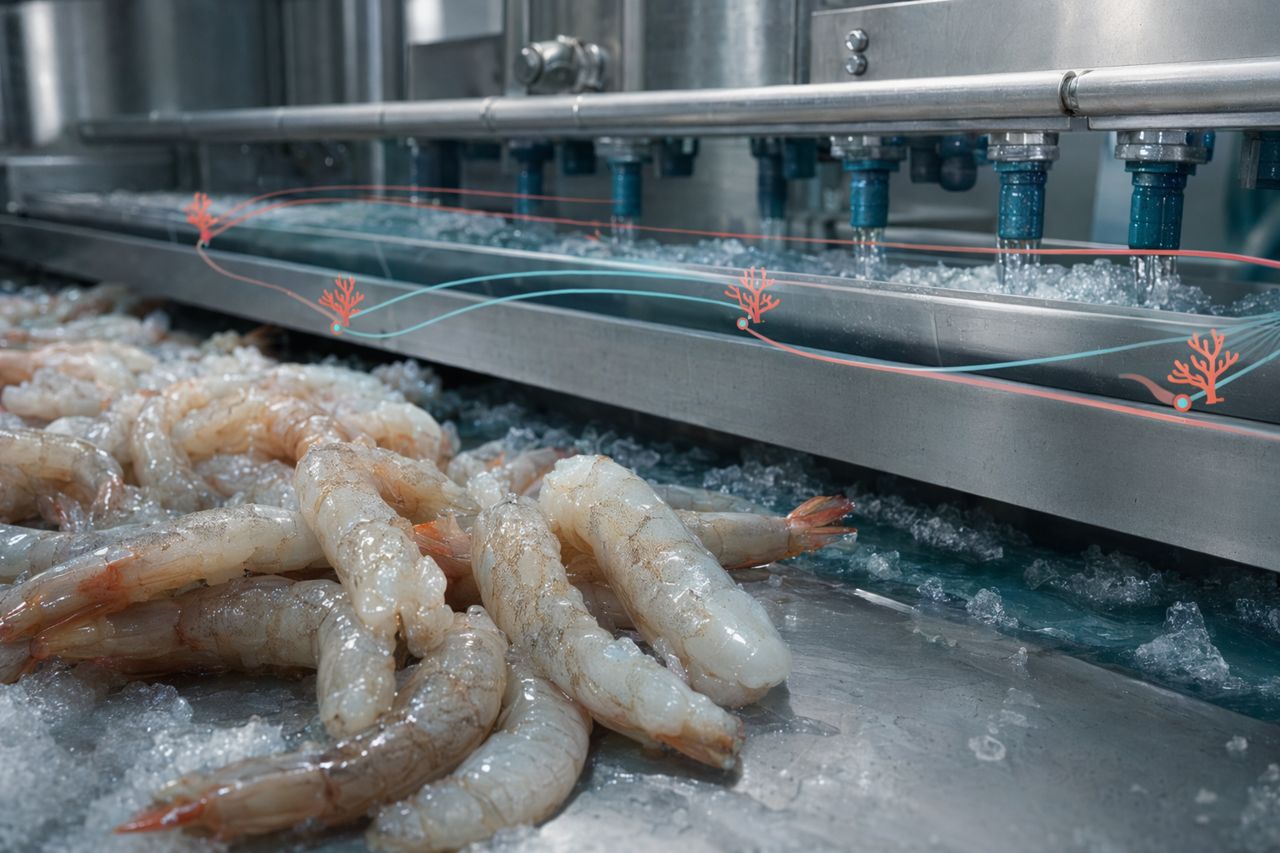
Enzyme-assisted peeling can help processors reduce harsh mechanical action when the process is controlled correctly. That can support:
- Cleaner shell release.
- Lower meat damage.
- More consistent appearance.
- Reduced hand-trimming pressure.
- Better pack uniformity.
For plant managers, the value is operational: more consistent yield entering the freezer and fewer defects amplified by packaging, glazing, and distribution.
Case design and pallet pattern influence claims
The master case is a protective structure, not just a shipping container. Poor case compression strength, weak corners, or incorrect pallet patterns can create crushed packs, broken shrimp, and uneven thaw behavior.
Review:
- Case wall strength under cold-room humidity.
- Liner fit and abrasion points.
- Bag orientation inside the case.
- Stack height by SKU and route length.
- Airflow around pallets during freezing and staging.
- Load stability through container movement.
If the outer case fails, the inner bag is forced to do work it was not designed to do.
Temperature control decides whether packaging can perform
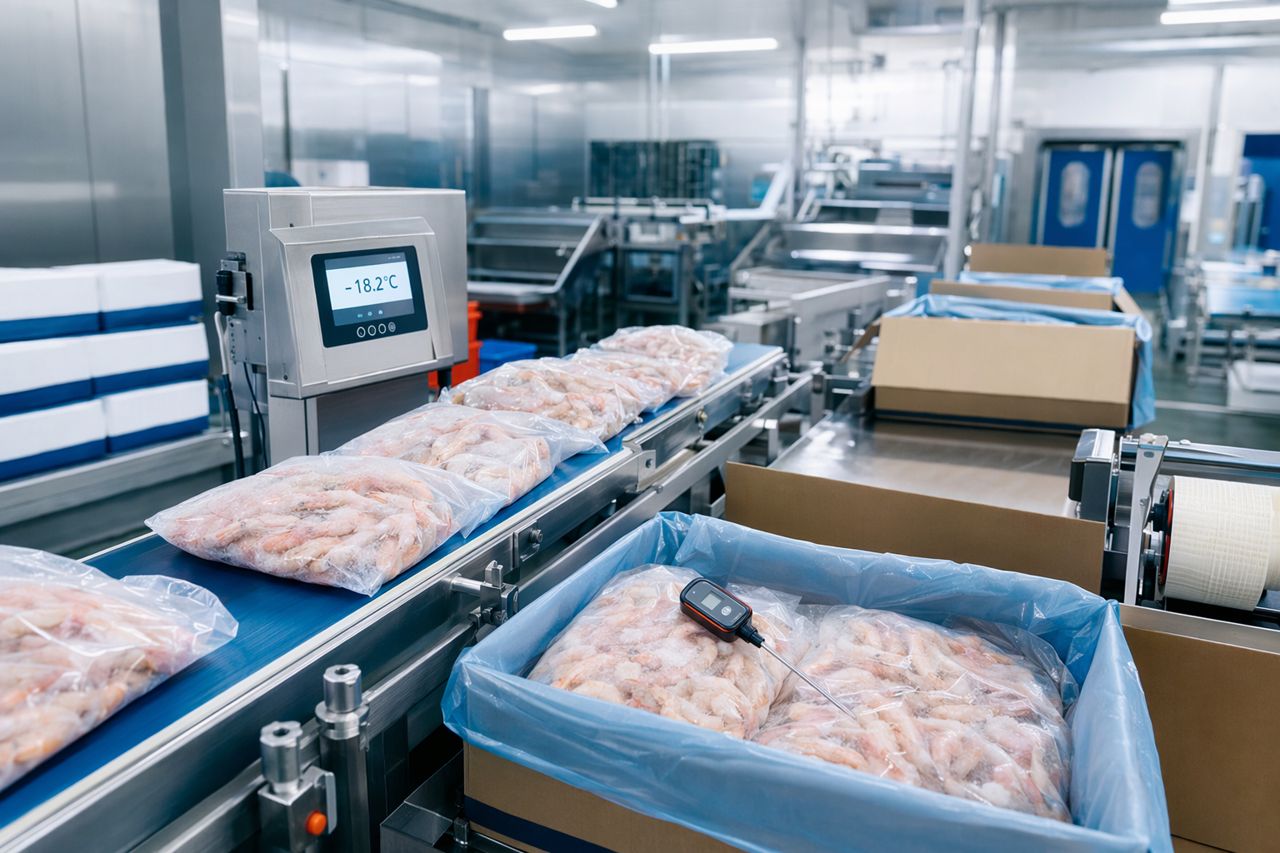
Even a strong film and a good case cannot compensate for repeated warm-up events. Packaging decisions should match actual cold-chain exposure: blast freezer exit, staging time, metal detection, case packing, pallet wrap, container loading, and receiving conditions.
Look for process points where product waits:
- Before bagging.
- After glazing.
- Before case sealing.
- During pallet consolidation.
- At the dock.
- During export inspection.
Shorter warm exposure protects texture, reduces clumping, and limits ice recrystallization. It also makes customer complaints easier to investigate because there are fewer uncontrolled variables.
Label language should match plant reality
Quality claims are not only physical. They can be commercial. Label language, buyer specifications, and internal QA records must align.
Check that packaging and documentation are consistent on:
- Count range.
- Peeled, deveined, tail-on, or tail-off description.
- Glaze declaration where applicable.
- Net weight and drained weight expectations.
- Lot coding and traceability.
- Country, handling, and storage instructions.
Clear label control reduces disputes and helps sales teams defend the product when a claim is reviewed.
What to ask packaging and cold-chain partners
Before approving a packaging change, bring suppliers into the plant-floor reality. Useful questions include:
- How does this film perform after frozen storage and rough handling?
- What seal window is realistic on our current line speed?
- How will bag geometry affect glaze appearance and case packing?
- What case compression data is relevant to our pallet height and export route?
- How does the packaging perform after temperature cycling?
- What visual defects should operators reject immediately?
- How will this change affect labor, rework, and throughput?
The right partner should be able to talk about downtime, yield protection, and customer inspection risk—not just material price.
A tighter quality-claim loop
Frozen shrimp quality claims decrease when peeling, glazing, packaging, freezing, and logistics are treated as one system. Packaging protects the product, but upstream process control determines how much protection is required.
Enzymechain supports cold-chain seafood plants that want cleaner shrimp peeling, steadier throughput, and more consistent pack quality. If packaging claims are exposing upstream damage or yield variation, it may be time to review the process before the bag.
Want to discuss an enzyme-supported shrimp peeling program for your line? Request a quote and include your species, product form, target throughput, approximate quantity per month, delivery country, and current claim concerns. Supply is wholesale and quoted per order.