Cold-Chain Hygiene Risks in Seafood Enzyme Handling Areas
Seafood plants add processing aids for one reason: better output without compromising product quality. But in a wet, refrigerated shrimp room, any new handling step changes the hygiene map. Enzyme preparation, brine handling, shell waste, condensate, and washdown traffic all need clear separation if the line is going to stay stable.
Enzymechain supports plants that need an enzyme supplier for shrimp peeling and seafood processing with practical, cold-room-aware handling guidance. The goal is not to make the process more complicated. The goal is to keep the enzyme workflow controlled, clean, and easy for operators to repeat across shifts.
Why enzyme handling needs its own cold-chain discipline
Enzyme-assisted peeling usually happens close to the highest-risk zones in the plant: thawing, brining, peeling, inspection, and shell discharge. These are wet areas with frequent personnel movement and high washdown intensity.
Common risk points include:
- Open containers staged near raw product traffic
- Shared scoops, hoses, or transfer tools between processing areas
- Splash from brine tanks, totes, or dosing points
- Condensate dripping onto preparation surfaces
- Shell waste carts crossing clean transfer routes
- Labels damaged or removed during washdown
- Standing water around drains and table legs
- Unclear responsibility between sanitation, production, and quality teams
None of these issues are unique to enzyme use. They are normal cold-chain plant realities. The difference is that enzyme handling introduces a precise process step that benefits from disciplined zoning.
Start with physical separation
A reliable enzyme workflow begins before the product reaches the peeling line. Plants should define where the material is received, where it is staged, where it is prepared, and how it moves to the point of use.
Recommended separation practices
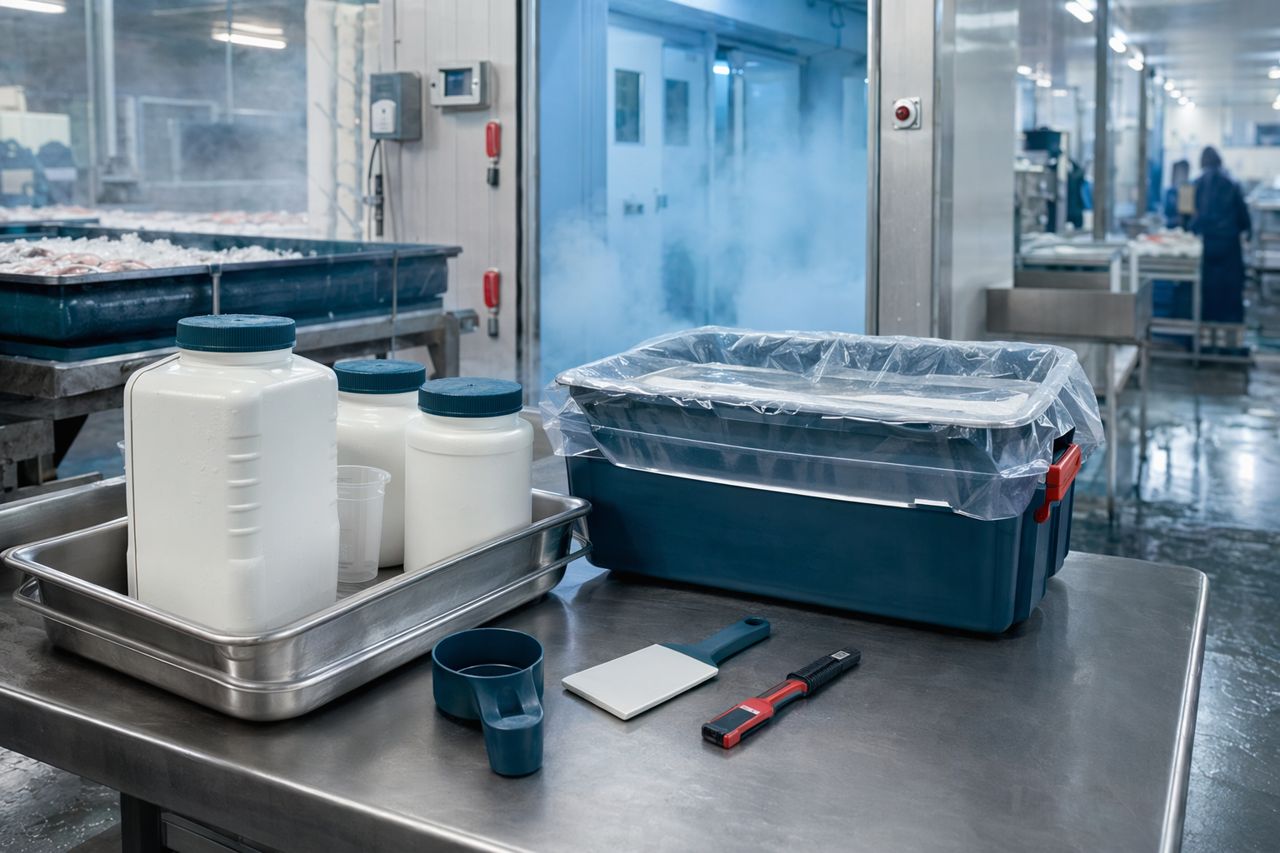
- Use a dedicated stainless preparation table or mixing station
- Keep enzyme containers closed except during measured preparation
- Assign color-coded tools for enzyme handling only
- Store opened containers in approved cold-chain conditions with clear status identification
- Keep the preparation point away from shell waste movement
- Route transfer paths away from foot traffic and drain splash zones
- Avoid placing containers directly on the floor
- Keep secondary containers clearly labeled after washdown
The best setup is usually simple: short movement, few handoffs, visible labels, and tools that cannot be mistaken for general-use equipment.
Control splash, condensate, and standing water
Cold seafood rooms are built around moisture. That makes splash control one of the most important hygiene practices in enzyme handling areas.
Watch these plant-floor details
Splash from addition points
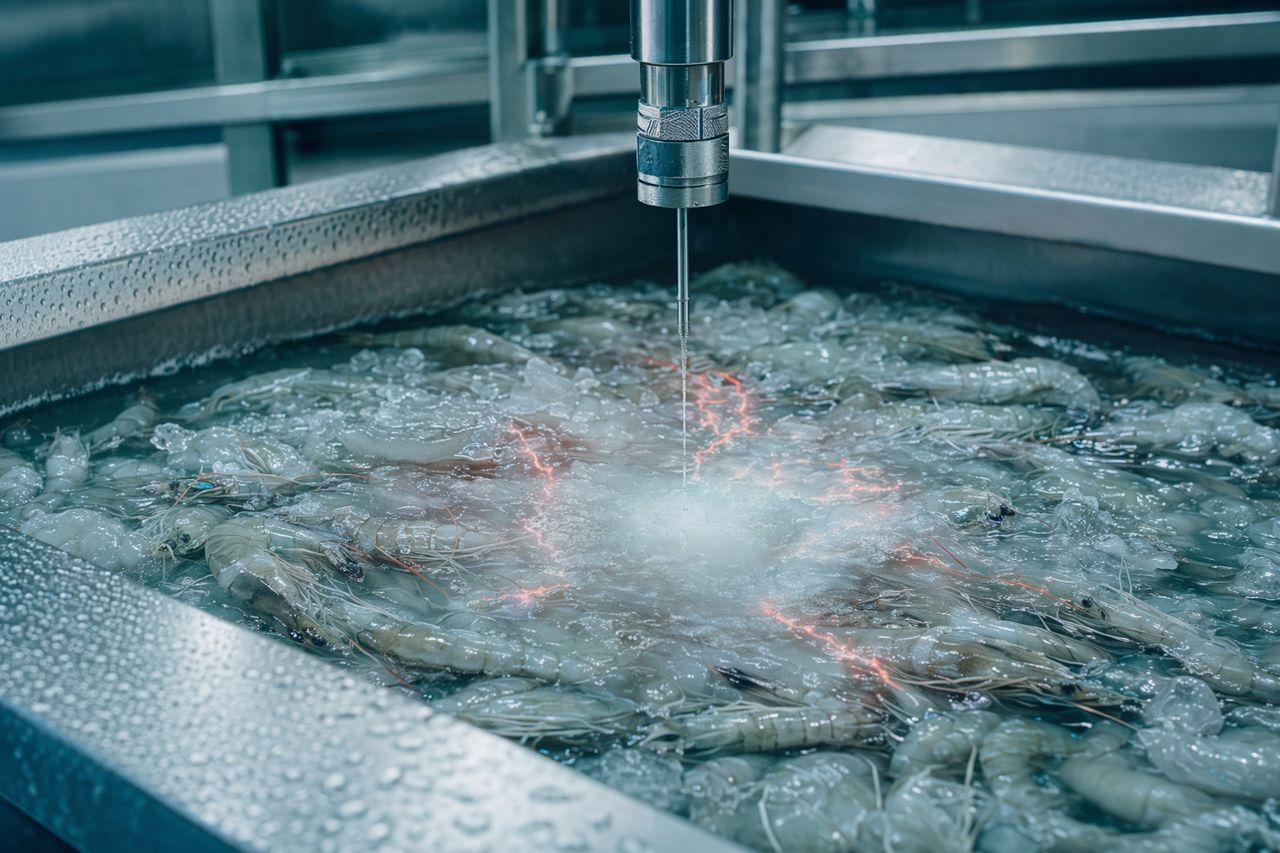
High-energy dumping into brine or process water can create droplets that reach rails, controls, lids, and nearby product contact areas. Low-turbulence addition points, covered totes, and controlled mixing reduce unnecessary spread.
Condensate above preparation areas
Overhead refrigeration lines, doorways, and cold-room transitions can create drip points. Enzyme preparation should not sit under known condensate paths.
Standing water after washdown
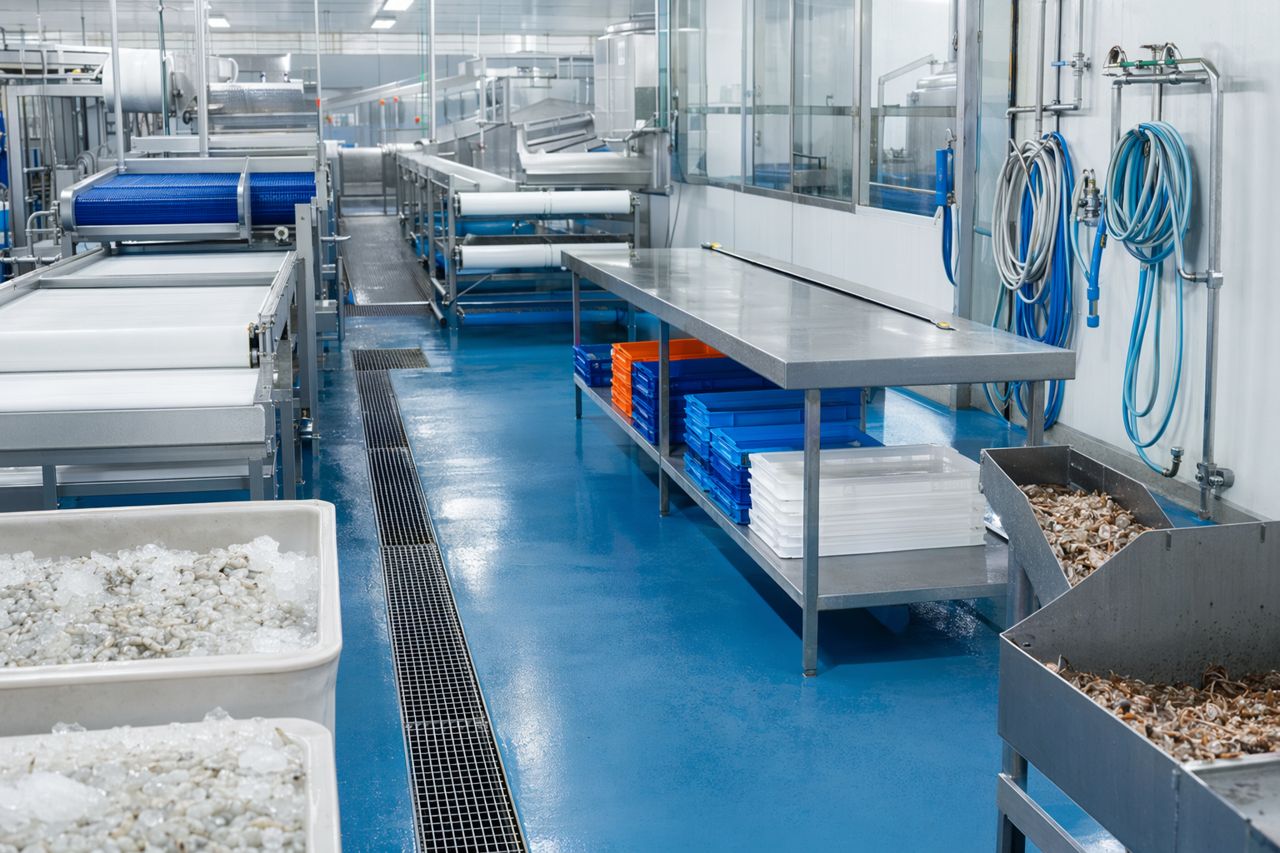
Water that remains around drains, table feet, hose reels, and tote wheels can carry residue into unintended zones. Sanitation teams should verify drainage and squeegee effectiveness before restart.
Hoses and nozzles
Hoses used across multiple zones can defeat separation plans. Dedicated hose management and clean storage hooks help prevent transfer from waste or floor contact zones.
Build the workflow around operators
A hygiene plan fails when it depends on memory under production pressure. Shrimp lines move fast. Operators are managing cold conditions, slick floors, labor rotation, product temperature, and throughput targets.
Make the correct action the easiest action:
- Keep enzyme handling tools at the preparation station, not in a distant cabinet
- Use large, washdown-resistant labels
- Mark clean and used containers clearly
- Standardize the order of preparation, transfer, and cleanup
- Post a short visual checklist near the station
- Define who signs off before the line restarts after sanitation
- Train backup operators, not just the primary lead
When operators can see the workflow, they repeat it more consistently.
Sanitation checks before restart
After washdown, the enzyme handling area should be inspected like any other product-adjacent process zone. The focus is practical readiness, not paperwork for its own sake.
Pre-start inspection points
- Preparation table is clean, dry, and free of non-assigned tools
- Transfer containers are closed, labeled, and staged correctly
- No standing water around drains, table legs, or tote paths
- Belts, rollers, guards, and hand tools are visibly clean
- Hoses are stored off the floor
- Shell waste routes are clear and separated
- Product contact areas are ready before enzyme preparation begins
- Opened material status is traceable
These checks help prevent rework, line stops, and operator confusion at startup.
Protect peel quality and yield consistency
Hygiene control is not separate from production performance. Poor separation can create inconsistent enzyme contact, uneven peel release, more mechanical damage, or avoidable downtime during quality holds.
A disciplined handling area supports:
- More consistent shell-release behavior
- Reduced rework from uneven peeling
- Better protection of shrimp appearance and texture
- Cleaner transitions between batches
- Lower risk of cross-traffic contamination events
- Faster sanitation verification
- More confidence during audits and customer visits
For plant managers, the value is straightforward: a cleaner workflow helps the peeling process stay predictable.
Supplier questions to ask before implementation
When choosing an enzyme partner for a cold-chain seafood operation, ask operational questions, not only product questions.
Consider asking:
- How should the material be staged in a refrigerated wet room?
- What handling practices reduce splash and misapplication risk?
- What container and labeling practices hold up after washdown?
- How should opened material be controlled between shifts?
- What workflow changes help protect peel quality and throughput?
- How can the process be introduced without disrupting sanitation routines?
- What information should production, sanitation, and quality teams share daily?
Enzymechain works with seafood processors that need enzyme solutions to fit the plant floor: cold rooms, stainless lines, wet traffic, labor rotation, and tight production windows.
Practical implementation sequence
For plants adding enzyme-assisted peeling or upgrading an existing seafood processing step, a staged approach usually works best.
1. Map the wet-room flow
Walk the line from receiving to thawing, brine, peeling, inspection, packaging, shell waste, and sanitation staging. Identify where people, product, tools, water, and waste cross paths.
2. Assign the enzyme handling zone
Choose a location that is close enough for efficient transfer but far enough from shell waste, drains, and heavy traffic.
3. Standardize tools and containers
Use dedicated, visible, washdown-resistant equipment. Remove shared tools from the process.
4. Train by shift
Train every shift on the same sequence. Include production leads, sanitation leads, maintenance support, and quality staff.
5. Verify during the first production runs
Observe actual behavior during startup, peak throughput, shift change, and cleanup. Adjust layout before small issues become habits.
Request a quote
If your plant is evaluating enzyme-assisted shrimp peeling, upgrading cold-chain hygiene practices, or looking for a more plant-floor credible supply partner, Enzymechain can help define a practical path.
Use the on-site request a quote form to share your seafood process, current constraints, and production goals. We will respond with options aligned to throughput, peel quality, temperature control, labor efficiency, downtime reduction, and consistent yield.